Everywhere in Nature
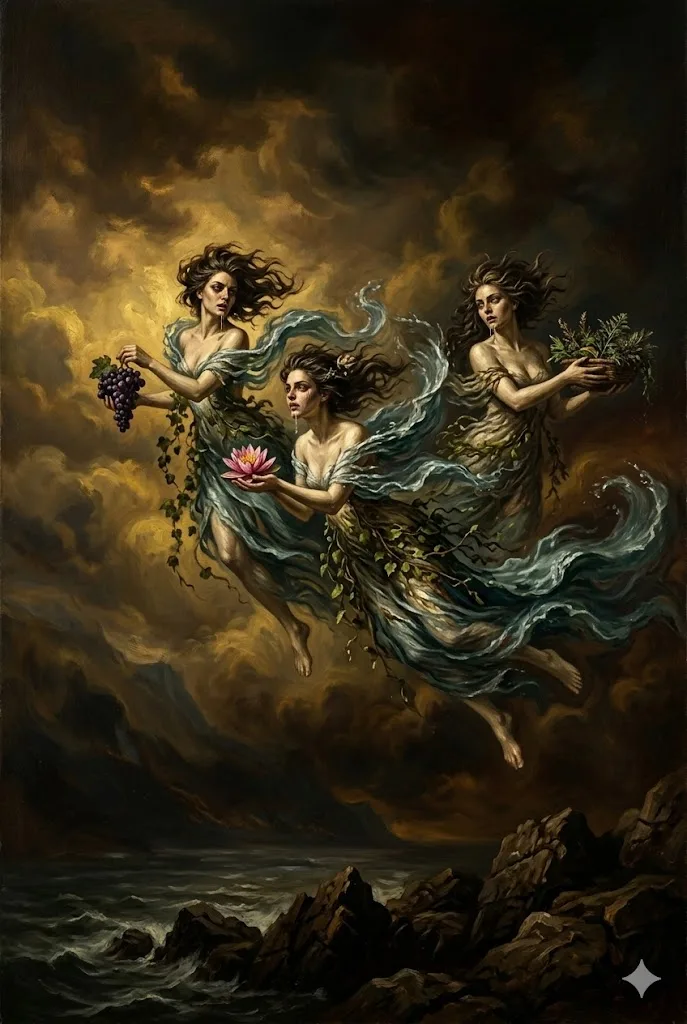
Nymphs were divine female nature spirits who inhabited virtually every feature of the natural landscape. They were not goddesses in the full Olympian sense but they were far more than mortal. They lived for thousands of years, possessed supernatural beauty, and could bless or curse those who encountered them. The Greeks believed that every river, spring, forest, mountain, meadow, and sea was alive with nymphs, making the entire natural world a sacred, inhabited space.
Types of Nymphs
Dryads were tree nymphs, each one bound to a specific tree. If the tree died, the Dryad died with it, which is why the Greeks considered cutting down an ancient tree a potentially fatal act of sacrilege. Hamadryads were a specific type of Dryad who were literally part of their tree. Naiads were freshwater nymphs of rivers, springs, streams, and fountains. They were considered the givers of fertility to the surrounding land and were worshipped at sacred springs across Greece.
Nereids were the fifty daughters of the sea god Nereus and inhabited the Mediterranean Sea. The most famous Nereid was Thetis, mother of Achilles. Oreads were mountain nymphs who lived on peaks and in caves. Echo, the nymph cursed by Hera to repeat others' words, was an Oread. Oceanids were daughters of Oceanus and Tethys, numbering three thousand, who presided over every body of water on earth.
Nymphs in Mythology
Nymphs appear throughout Greek mythology as love interests of gods, mothers of heroes, companions of Artemis and Dionysus, and guardians of sacred places. Calypso, who detained Odysseus for seven years on her island, was a nymph. The nurses who raised the infant Zeus on Crete were nymphs. Daphne, who was transformed into a laurel tree to escape Apollo, was a nymph. They are among the most frequently mentioned beings in Greek literature, yet because they are not major gods or heroes, they are often overlooked.
Why Nymphs Matter
The nymph tradition reveals something fundamental about how the ancient Greeks experienced the natural world. Every spring had a personality. Every ancient tree had a guardian spirit. Every mountain echo was the voice of a divine being. To harm nature was to harm the nymphs, and the nymphs could take revenge. In an age of environmental crisis, the Greek concept of nature as inhabited by divine spirits who demand respect feels remarkably prescient.
Classical Sources
- 📜 Homer, Iliad & Odyssey (c. 750 BC)
- 📜 Hesiod, Theogony (c. 700 BC)
- 📜 Apollodorus, Bibliotheca (c. 1st-2nd century AD)
- 📜 Ovid, Metamorphoses (8 AD)
Cross-referenced with multiple classical sources for accuracy.
Explore More
Artemis · Dionysus · Apollo · Pan · Apollo & Daphne · Echo & Narcissus · Home