Children of the Wild
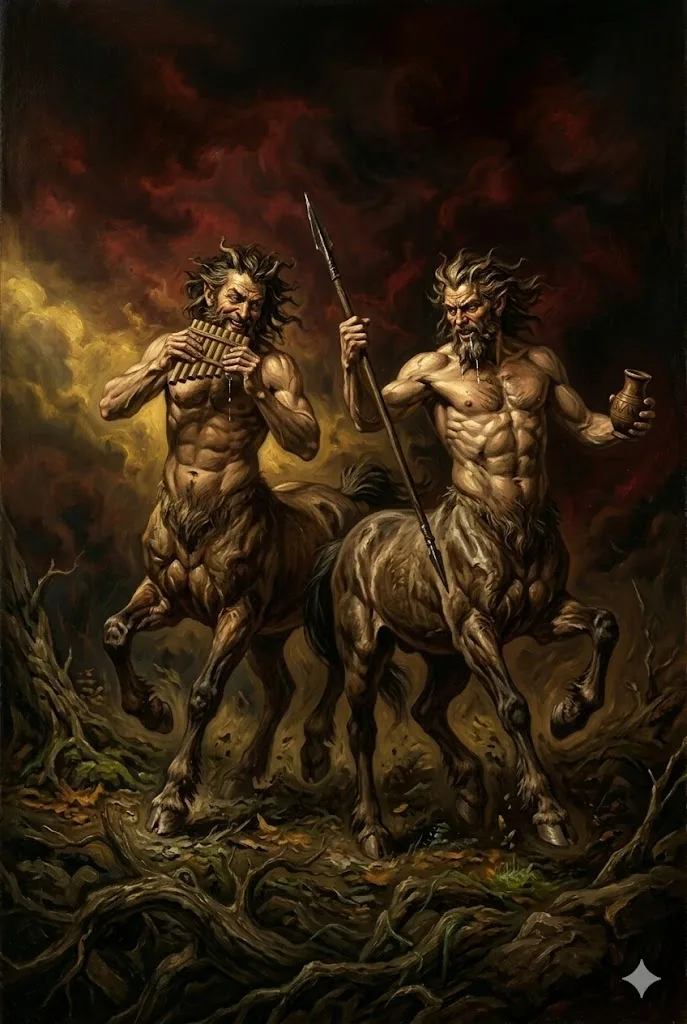
Satyrs were wild nature spirits associated with forests, mountains, and untamed wilderness. In the earliest Greek art they appeared as men with horse ears, tails, and sometimes horse legs. By the later classical period they had evolved into the more familiar image of men with goat legs, horns, and pointed ears. They were companions of Dionysus, the god of wine, and spent their time drinking, dancing, playing music, and chasing nymphs through the forest.
Silenus
The most famous individual satyr was Silenus, the oldest and wisest of their kind, who served as tutor and companion to Dionysus. Despite his perpetual drunkenness, Silenus possessed profound wisdom. When King Midas captured him and demanded he share the greatest truth, Silenus replied with one of the bleakest statements in Greek philosophy: the best thing for a mortal is never to be born at all, and the second best is to die as quickly as possible. This dark wisdom, coming from a figure associated with revelry, captures the Greek understanding that joy and despair are never far apart.
Marsyas
The satyr Marsyas found a flute that Athena had discarded and became so skilled that he challenged Apollo to a musical contest. Apollo won, and as punishment for the hubris of challenging a god, he flayed Marsyas alive. The other satyrs and nymphs wept so profusely that their tears formed a river named after Marsyas. This brutal myth illustrates the Greek belief that mortals and lesser beings must never presume to equal the gods, no matter how talented they are.
Cultural Legacy
The word 'satire' derives from satyr plays, a form of comedic drama that was performed alongside Greek tragedies. Satyrs represented the wild, instinctual side of human nature that civilization tries to suppress. In Renaissance art they became symbols of lust and excess. In modern fantasy, they evolved into the fauns of Narnia and the satyrs of Percy Jackson. Their enduring appeal lies in what they represent: the untamed part of ourselves that refuses to be civilized.
Classical Sources
- 📜 Homer, Iliad & Odyssey (c. 750 BC)
- 📜 Hesiod, Theogony (c. 700 BC)
- 📜 Apollodorus, Bibliotheca (c. 1st-2nd century AD)
- 📜 Ovid, Metamorphoses (8 AD)
Cross-referenced with multiple classical sources for accuracy.