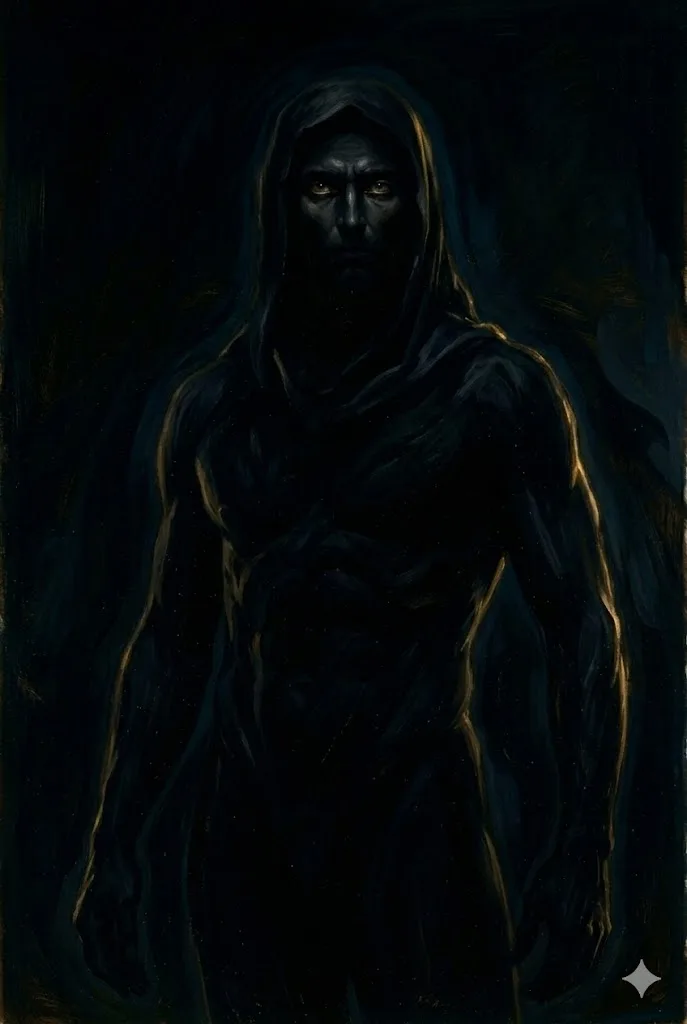
Born from the Void
Erebus was the primordial personification of darkness, one of the very first beings to emerge from Chaos at the creation of the cosmos. According to Hesiod's Theogony, Erebus came into existence alongside Nyx (Night), and together they represent the fundamental darkness that preceded all light, life, and order. While Nyx personified the darkness of night that descends upon the earth, Erebus represented a deeper, more absolute darkness: the impenetrable shadow of the Underworld through which all dead souls must pass.
Father of Light
In one of the great paradoxes of Greek cosmology, Erebus and Nyx produced Aether (the bright upper atmosphere) and Hemera (Day). Darkness literally gave birth to light. This was not accidental. The Greeks understood that light is only meaningful in contrast to darkness, that day can only exist because night precedes it. The cosmos required darkness first so that light could emerge from it and be recognized as something distinct and valuable.
The Shadow Path
Erebus also referred to a specific region of the Underworld, the zone of darkness that souls passed through immediately after death, before reaching the banks of the Acheron where Charon waited. It was a place of transition, neither the world of the living nor the realm of the dead, but the shadow between them. When Homer describes Odysseus summoning ghosts at the edge of the world, the spirits rise from Erebus, emerging from absolute darkness into the dim twilight where the living hero can perceive them.
Classical Sources
- 📜 Homer, Iliad & Odyssey (c. 750 BC)
- 📜 Hesiod, Theogony (c. 700 BC)
- 📜 Apollodorus, Bibliotheca (c. 1st-2nd century AD)
- 📜 Ovid, Metamorphoses (8 AD)
Cross-referenced with multiple classical sources for accuracy.
Explore More
Nyx · Underworld · Charon · Gaia · Home