Agamemnon — King of Kings — The Commander Who Won Tr
⚡ Quick Facts
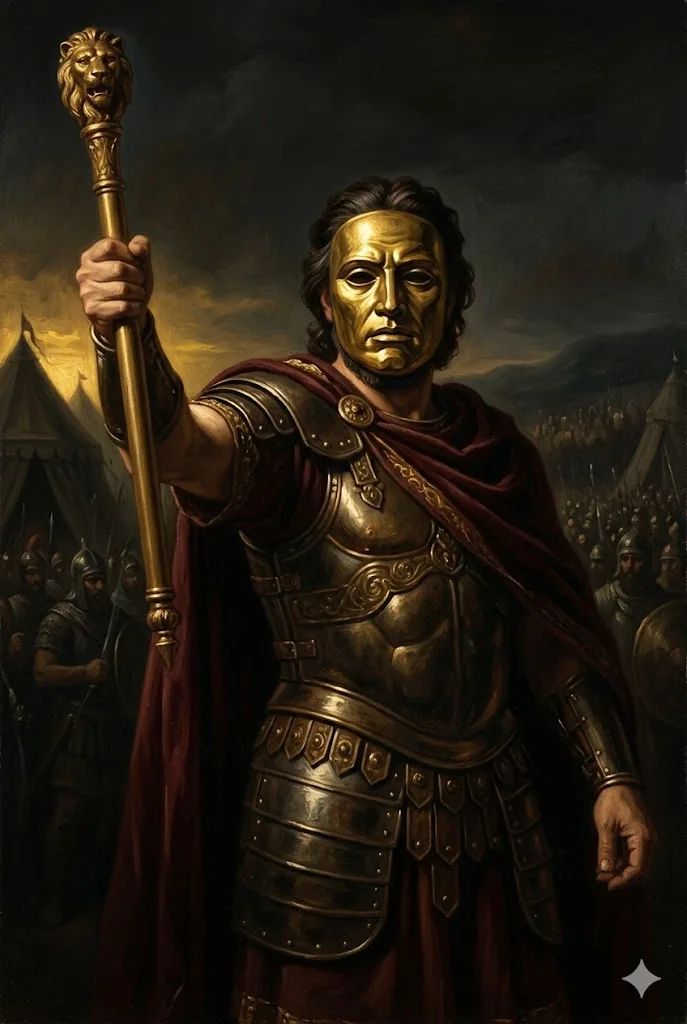
The Most Powerful Greek King
Agamemnon ruled Mycenae, the wealthiest and most powerful kingdom in Greece. When his brother Menelaus' wife Helen was taken by Paris of Troy, Agamemnon invoked the Oath of Tyndareus — a pact sworn by all of Helen's former suitors to defend her marriage. He assembled the largest military force the ancient world had seen: over a thousand ships and tens of thousands of warriors.
But Agamemnon's authority was political, not moral. He was arrogant, greedy, and willing to sacrifice anyone — including his own daughter — to achieve his goals. Homer presents him as a king who commands through status rather than merit, contrasted with warriors like Achilles and Odysseus who earned respect through excellence.
The Sacrifice of Iphigenia
Before the Greek fleet could sail from Aulis, the winds died completely. The seer Calchas revealed that Agamemnon had offended Artemis by killing a sacred deer and boasting he was a better hunter than the goddess. Her price for favorable winds: Agamemnon's eldest daughter, Iphigenia.
Agamemnon lured his daughter to Aulis by telling her she would marry Achilles. Instead, she was sacrificed on Artemis' altar. In some versions, Artemis substituted a deer at the last moment and spirited Iphigenia away to serve as her priestess in Tauris. But the damage was done — Clytemnestra never forgave her husband.
The Quarrel with Achilles
During the siege of Troy, Agamemnon was forced to return his war prize Chryseis to her father, a priest of Apollo, after the god sent a plague. To compensate himself, he seized Briseis from Achilles. This insult drove Achilles to withdraw from battle — a decision that nearly cost the Greeks the war and led directly to the death of Patroclus.
Murder and Legacy
Agamemnon returned home victorious from Troy, only to be murdered by his wife Clytemnestra and her lover Aegisthus. In Aeschylus' version, Clytemnestra lured him into a bath, tangled him in a robe, and stabbed him to death. She acted partly from vengeance for Iphigenia and partly from her affair with Aegisthus.
Years later, Agamemnon's son Orestes returned to avenge his father by killing both Clytemnestra and Aegisthus — a matricide that brought the Furies down upon him and formed the basis of Aeschylus' Oresteia, one of the greatest works of Greek tragedy.
The house of Atreus behind the king
Agamemnon inherited a family history that the Greeks treated as a curse running through generations. His great-grandfather Tantalus served his own son Pelops to the gods; Pelops won his bride by sabotaging a chariot race and murdering the charioteer Myrtilus, who cursed the line as he fell. In the next generation Atreus quarrelled with his brother Thyestes over the throne of Mycenae and over a golden lamb, discovered that Thyestes had seduced his wife Aerope, and served Thyestes his own children at a banquet. Aegisthus, the son Thyestes later fathered to avenge that feast, is the same man who would help kill Agamemnon. When the tragedians show the murder in the bath, they mean it as the latest payment on a very old debt.
Homer knows a calmer version of this genealogy. In Iliad 2 the royal sceptre is traced from Hephaestus to Zeus, then to Hermes, Pelops, Atreus, Thyestes and finally Agamemnon, with no hint of cannibal feasts. The darker family saga is mostly a product of later epic and Athenian tragedy.
Agamemnon and Menelaus are said to have spent part of their youth in exile at Sparta, where King Tyndareus helped restore them and married his daughters to them: Helen to Menelaus, Clytemnestra to Agamemnon. Euripides adds a grim detail in Iphigenia at Aulis: Clytemnestra reminds Agamemnon that he had killed her first husband, Tantalus, and the infant she had by him before taking her as his wife.
Agamemnon in the Iliad: more than an arrogant king
The quarrel over Briseis is famous, but the Iliad gives Agamemnon a more complicated portrait. In Book 2 Zeus sends him a deceptive dream promising that Troy will fall at once; Agamemnon decides to test the army by proposing they sail home, and the men stampede for the ships until Odysseus restores order and silences Thersites. In Book 9, with the Greeks pinned against their camp, he weeps openly and offers Achilles an enormous settlement: tripods, horses, seven women, the return of Briseis untouched, seven cities, and any of his daughters in marriage. Homer names those daughters as Chrysothemis, Laodice and Iphianassa, and never mentions a sacrifice at Aulis. Book 11 gives him a genuine aristeia, a run of battlefield glory, until he is wounded and withdraws. In Book 19 he makes a public apology of sorts, blaming Zeus, Fate and Ate, the goddess of ruinous delusion, for his blindness. Homer's usual title for him is anax andron, "lord of men", and the poem consistently treats him as the man with the most ships and the most authority, not the best fighter.
Different versions of the murder
The Odyssey mentions the death of Agamemnon again and again, as a warning that contrasts with Penelope's faithfulness. There Aegisthus is the main killer: he invites Agamemnon to a feast and cuts him down "as one slaughters an ox at the manger", while Clytemnestra kills Cassandra beside him. Agamemnon's shade in the underworld bitterly warns Odysseus never to trust a wife fully. Aeschylus moves Clytemnestra to the centre, makes the bath and the enveloping robe the instruments of the crime, and gives her the motive of Iphigenia's death. Pindar, in Pythian 11, openly asks which motive was stronger, the slaughtered daughter or the adulterous affair, and sets the killing at Amyclae in Laconia rather than at Mycenae. Some early lyric poets also placed Agamemnon's palace in Laconia, so the location of the crime was not fixed in antiquity.
The aftermath belongs to his children: Orestes, who kills his mother, and Electra, who in the tragedians keeps her father's memory alive while living in disgrace in the palace.
Cult, archaeology and common misunderstandings
Agamemnon was worshipped as a hero. Near Mycenae, archaeologists have identified a shrine (often called the Agamemnoneion) where offerings were made to him from the Geometric period onward, and at Amyclae a sanctuary honoured him together with Cassandra, whom the Laconians called Alexandra. Pausanias reports that the people of Mycenae showed tombs of Agamemnon, of his charioteer Eurymedon, and of twin sons Cassandra had borne him.
The best-known artefact linked to him, the gold "Mask of Agamemnon" that Heinrich Schliemann found in Grave Circle A in 1876, is not his. It dates to roughly the sixteenth century BC, centuries before any plausible date for a Trojan War. Another common error is assuming Homer tells the story of Iphigenia; the sacrifice comes from the later epic Cypria and the tragedians.
Ancient sources
- Homer, Iliad 1, 2, 9, 11 and 19 — the quarrel with Achilles, the testing of the army, the embassy offering gifts, Agamemnon's own battlefield exploits, and his reconciliation speech blaming Ate.
- Homer, Odyssey 3, 4 and 11 — Nestor, Menelaus and Agamemnon's own ghost describe the murder by Aegisthus at a feast and the killing of Cassandra.
- Aeschylus, Agamemnon (458 BC) — the first play of the Oresteia: the return from Troy, the purple carpet, Cassandra's visions, and the murder in the bath.
- Euripides, Iphigenia at Aulis — Agamemnon's wavering over the sacrifice, the false marriage to Achilles, and Clytemnestra's account of how he won her.
- Pindar, Pythian 11 — sets the murder at Amyclae and weighs Clytemnestra's possible motives.
- Pausanias, Description of Greece 2.16 — the tombs shown at Mycenae for Agamemnon, Cassandra and their companions.
Frequently asked questions
Why did Clytemnestra kill Agamemnon?
Ancient authors give different reasons. Homer stresses her seduction by Aegisthus; Aeschylus emphasises revenge for the sacrifice of Iphigenia; Euripides adds that Agamemnon had killed her first husband and child. Bringing Cassandra home as a concubine deepened the insult.
Was Agamemnon a real person?
There is no direct evidence. Mycenae was a powerful Bronze Age centre, and Hittite texts mention a kingdom called Ahhiyawa that many scholars link to Mycenaean Greeks, but no inscription names Agamemnon.
Is the Mask of Agamemnon really his?
No. It comes from a shaft grave dated about three centuries earlier than the traditional date of the Trojan War. Schliemann's name for it stuck anyway.
How many children did Agamemnon have?
Homer names Orestes and three daughters, Chrysothemis, Laodice and Iphianassa. Later writers usually list Iphigenia, Electra, Chrysothemis and Orestes, often treating Laodice as an older name for Electra.