I. Who Was Themis?
Themis was the Titaness of divine law, natural order, and custom — the force that ensured the cosmos operated according to right and proper rules. She represented not human-made laws but the deeper, unwritten laws of nature and the universe: the turning of the seasons, the proper behavior of host and guest, the sacred bonds of oath and prophecy. Her name literally means "that which is established" or "divine law."
Themis was Zeus's second wife (after Metis) and his most trusted counselor. She sat beside his throne on Olympus and advised him on matters of cosmic justice. Together they produced the Horae (Seasons) — Eunomia (Good Order), Dike (Justice), and Eirene (Peace) — and the Moirai (Fates) — Clotho, Lachesis, and Atropos — who spun, measured, and cut the thread of every mortal life.
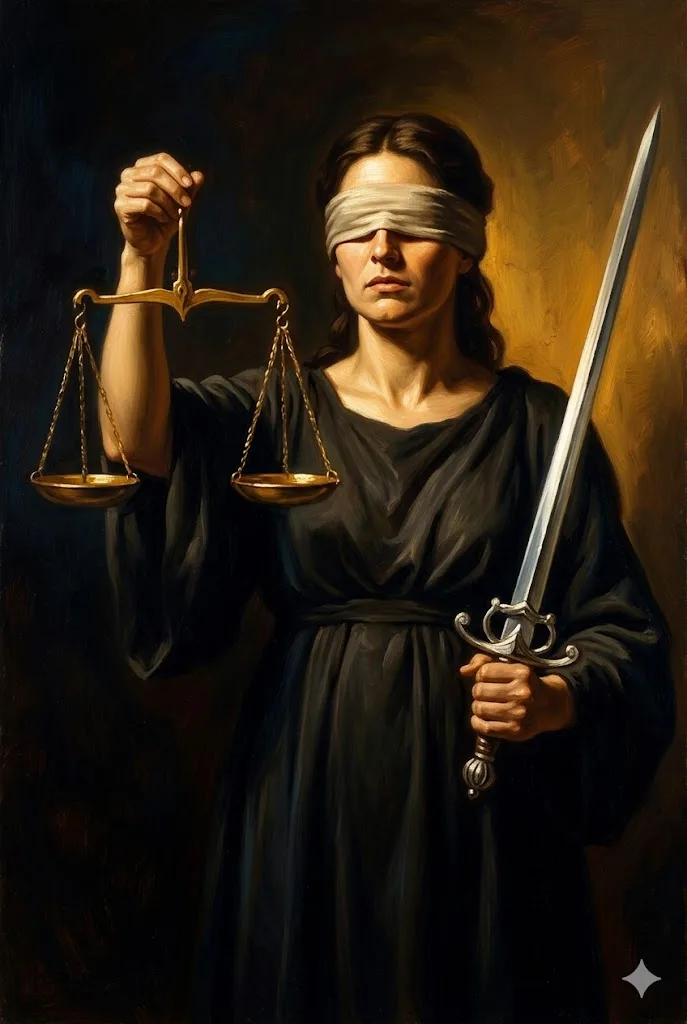
Before Apollo claimed the Oracle at Delphi, it belonged to Themis. She was the second deity to hold the prophetic shrine (after her mother Gaea), and she passed it to her sister Phoebe, who in turn gave it to Apollo. This lineage means that Greek prophecy itself traced its origins to the Titan goddess of divine order. In art, Themis is depicted blindfolded, holding scales — an image that became the universal symbol of justice still used in courtrooms worldwide.
Classical Sources
The mythology of Themis is preserved in:
- 📜 Hesiod, Theogony (c. 700 BC) — The primary source for Titan mythology, genealogy, and the Titanomachy.
- 📜 Apollodorus, Bibliotheca (c. 1st–2nd century AD) — Comprehensive handbook of Titan genealogies and myths.
- 📜 Aeschylus, Prometheus Bound (c. 5th century BC) — Dramatic portrayal of Titan defiance against Olympian authority.
- 📜 Ovid, Metamorphoses (8 AD) — Roman accounts of Titan mythology and transformations.
Cross-referenced with multiple classical sources for accuracy.
Themis on Olympus: assemblies and the Trojan War
In Homer, Themis is less a distant principle than a working member of the divine household. In Iliad 15, she is the first to greet Hera when Hera comes back to Olympus angry. She offers her a cup and asks what is wrong. In Iliad 20, Zeus orders Themis to summon all the gods, rivers and nymphs to the assembly at which he allows them to join the fighting. In the Odyssey, Telemachus calls on "Themis, who dissolves and seats the assemblies of men." Her name was closely connected with proper procedure: the right way to call a meeting, receive a guest or make a claim.
She was also present at the decisions that started the Trojan War. According to the ancient summary of the lost epic Cypria, Zeus plans the war in consultation with Themis. In Pindar's eighth Isthmian Ode, Themis prevents a disaster. When Zeus and Poseidon are competing for Thetis, she warns them that the sea-goddess is fated to bear a son greater than his father. She advises marrying Thetis to the mortal Peleus instead. Their son was Achilles, and the wedding where Eris threw the golden apple led on to the Trojan War.
Prophecy after Delphi, and the riddle for Deucalion
Themis's prophetic role continued after the oracle passed to Apollo. In Ovid's Metamorphoses, Deucalion and Pyrrha, the only survivors of the flood, go to her shrine below Parnassus. She tells them to throw "the bones of your great mother" behind them. Pyrrha is horrified, but Deucalion works out that the mother is Earth and her bones are stones, and the thrown stones become a new race of people. In Aeschylus's Prometheus Bound, Themis is the mother of Prometheus and is identified with Gaia, "one form with many names." His knowledge of the future comes from her. Euripides, on the other hand, shows Apollo taking Delphi from Themis by force, while Aeschylus has her hand it peacefully to Phoebe.
A red-figure cup by the Kodros Painter (c. 440 BC, Berlin) shows Themis seated on the Delphic tripod, holding a laurel branch and a dish, giving a prophecy to King Aegeus of Athens. It is one of the clearest images of her as an oracle-giver.
Family, and a contradiction in Hesiod
Hesiod lists Themis as Zeus's second wife and names their children as the Horae (Eunomia, Dike, Eirene) and the Moirai (Clotho, Lachesis, Atropos), who give mortals good and bad. Earlier in the same poem, though, the Moirai are daughters of Night with no father. Hesiod never resolves this, and ancient readers simply accepted both versions. See the Fates for more on these figures. Astraea, sometimes added to Themis's children, has an uncertain parentage. Aratus, whose "Maiden" became the constellation Virgo, suggests she may be a daughter of Astraeus instead.
Themis is also different from Dike and from Nemesis. Themis is what is rightfully established, the order of things as the gods set it. Her daughter Dike is justice in the sense of court verdicts and payback. Nemesis is the anger that strikes those who cross the line.
Worship at Rhamnous and elsewhere
Themis's best-preserved sanctuary is at Rhamnous in Attica. A small temple of Themis stands beside the larger temple of Nemesis there. A marble statue of Themis from the site, signed by the sculptor Chairestratos and dating to about 300 BC, is now in the National Archaeological Museum in Athens. It shows a standing, heavily draped woman, with no blindfold and no scales. She was regularly invoked in oaths, and the epithet Ichnaia attached to her in the Homeric Hymn to Apollo seems to come from a local cult site.
What modern readers get wrong
The blindfolded Lady Justice with scales and sword is not an ancient image of Themis. Ancient art never shows Themis blindfolded. The figure developed mainly from the Roman personification Iustitia, and the blindfold was added in Europe around the late fifteenth and sixteenth centuries, at first possibly as satire on justice that could not see. Modern courthouses often call the statue "Themis," but the design is Renaissance, not Greek. Themis's real attributes in ancient art are much quieter: the tripod, the laurel, the libation dish and a position beside Zeus.
Ancient sources
- Hesiod, Theogony 135 and 901–906: Themis among the Titans and as Zeus's second wife, mother of the Horae and the Moirai.
- Homer, Iliad 15 and 20; Odyssey 2: Themis greets Hera with a cup, summons the gods to assembly, and presides over the assemblies of men.
- Pindar, Isthmian 8: Themis reveals the prophecy about Thetis's son and advises marrying her to Peleus.
- Aeschylus, Eumenides 1–8 and Prometheus Bound: Themis as the second holder of Delphi, and as Prometheus's mother, identified with Gaia.
- Ovid, Metamorphoses 1: Deucalion and Pyrrha consult Themis's oracle and receive the riddle of the "bones of the great mother."
- Cypria (summary by Proclus): Zeus plans the Trojan War together with Themis.
Frequently asked questions
Is Themis the same as Lady Justice?
Only loosely. Lady Justice is modelled mainly on the Roman Iustitia, and her blindfold is a Renaissance addition. The Greek Themis was never shown blindfolded.
Who are the children of Themis?
In Hesiod: the three Horae (Eunomia, Dike, Eirene) and the three Moirai, fathered by Zeus. Aeschylus also makes her the mother of Prometheus.
What is the difference between Themis and Dike?
Themis is divine order and what is customarily right. Dike, her daughter, is justice as verdict and punishment in human affairs.
Where was Themis worshipped?
Most famously at Rhamnous in Attica, beside Nemesis. She also had a role at Delphi and was invoked in oaths and assemblies.
Explore More Mythology
Get weekly deep dives into the gods, heroes, and myths of ancient Greece.