The Forgotten Champion
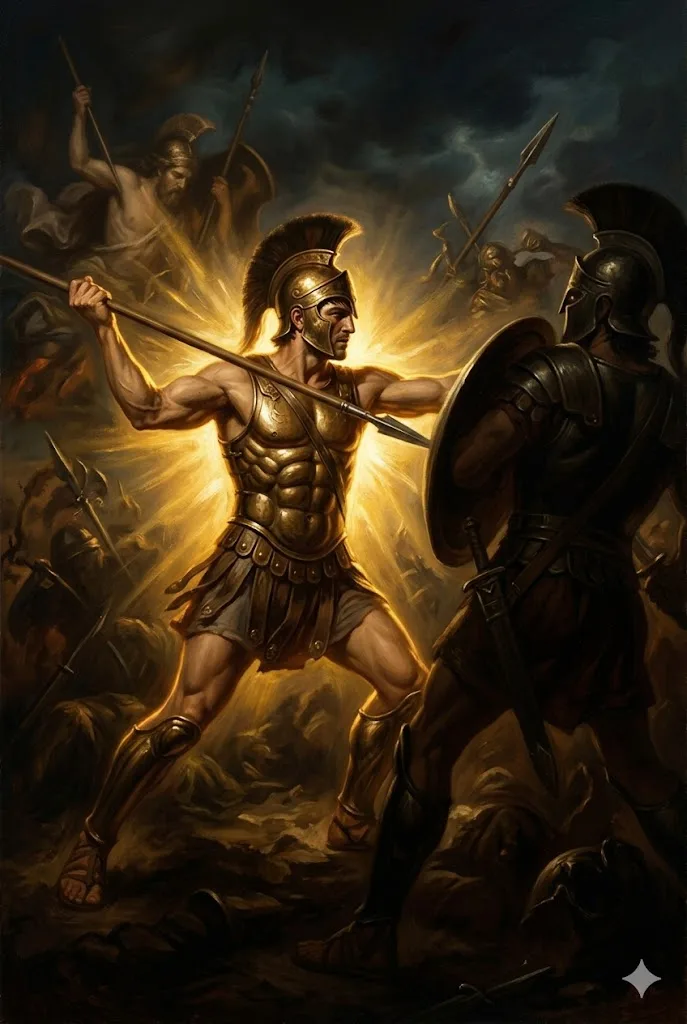
Diomedes is the most underrated hero in Greek mythology. While Achilles sulked in his tent and Ajax held the line, Diomedes went on a rampage in Book 5 of the Iliad that is arguably the most impressive feat of arms in the entire poem. Empowered by Athena, who lifted the mist from his eyes so he could see the gods on the battlefield, Diomedes did what no other mortal ever accomplished: he wounded two Olympian gods in a single day.
Wounding the Gods
When Aphrodite descended to the battlefield to rescue her wounded son Aeneas, Diomedes charged straight at her and slashed her wrist with his spear. Ichor, the golden blood of the gods, flowed from the wound. Aphrodite fled screaming to Olympus where Zeus told her to stay out of war. Then Ares himself, the god of war in full battle fury, attacked Diomedes. With Athena guiding his spear, Diomedes stabbed Ares in the belly. The god of war screamed with the voice of ten thousand men and fled to Olympus to complain to Zeus, who told him he was the most hateful of all gods.
Beyond Troy
Diomedes was also one of the warriors inside the Trojan Horse and helped Odysseus steal the Palladium, the sacred statue of Athena that protected Troy. Unlike most Greek heroes, Diomedes survived the war and the journey home without disaster. He returned safely to Argos, though some traditions say he found his wife unfaithful and eventually sailed to Italy, where he founded several cities. His relatively happy ending is unusual in Greek mythology, perhaps a reward for his unwavering piety toward Athena.
Why He's Forgotten
Diomedes is overshadowed by Achilles because the Iliad is fundamentally Achilles' story. But in terms of pure battlefield performance, Diomedes in Book 5 is arguably more impressive than anything Achilles does. He fights gods and wins. He shows no fear. And unlike Achilles, he doesn't need rage or grief to motivate him. He fights because it's the right thing to do. In a mythology full of flawed heroes, Diomedes comes closest to the ideal.
Classical Sources
- 📜 Homer, Iliad & Odyssey (c. 750 BC)
- 📜 Hesiod, Theogony (c. 700 BC)
- 📜 Apollodorus, Bibliotheca (c. 1st-2nd century AD)
- 📜 Ovid, Metamorphoses (8 AD)
Cross-referenced with multiple classical sources for accuracy.
Explore More
Achilles · Athena · Ares · Trojan War · Home