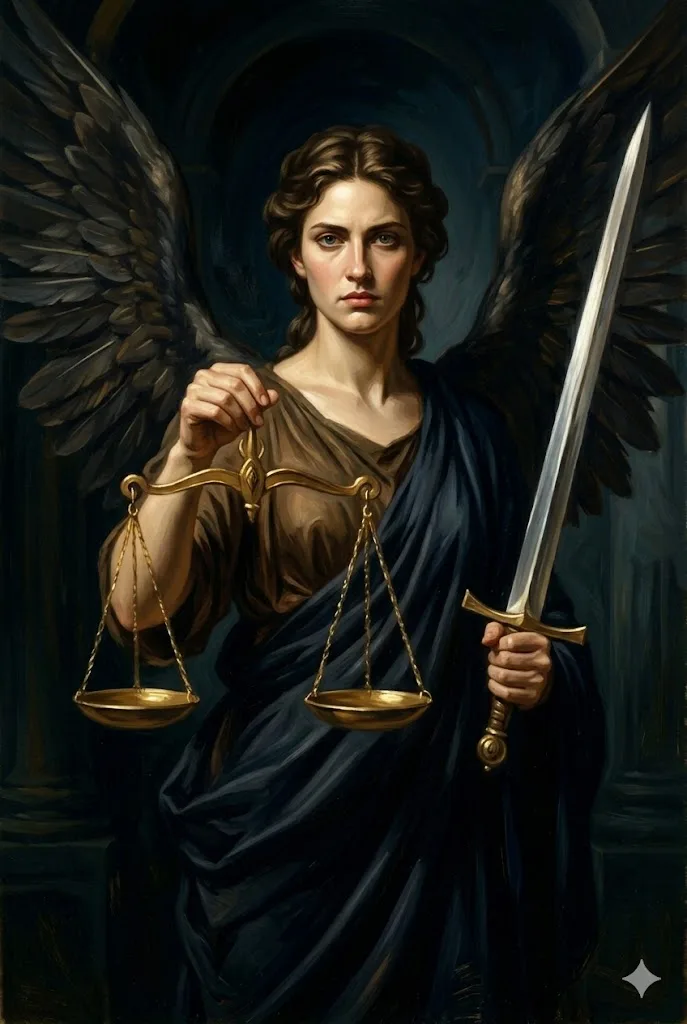
The Balance Keeper
Nemesis embodied one of the most fundamental concepts in Greek thought: that excessive good fortune, pride, or arrogance would inevitably be balanced by suffering. She was not cruel — she was necessary. Without Nemesis, the cosmic order would collapse into chaos.
Her name comes from the Greek word nemein, meaning 'to give what is due.' She measured out fortune and misfortune to ensure no one received more than their share.
How Nemesis Worked
Nemesis operated on a principle the Greeks called phthonos theon — the jealousy of the gods. When a mortal became too wealthy, too successful, or too proud, Nemesis would intervene to restore balance. This wasn't personal vendetta; it was cosmic maintenance.
King Croesus of Lydia learned this when his vast wealth and confidence led him to war against Persia, losing everything. Polycrates of Samos, blessed with unbroken good fortune, tried to pre-empt Nemesis by throwing his most precious ring into the sea — but a fish swallowed it and returned it to him, proving that Nemesis could not be cheated.
The Temple at Rhamnous
Nemesis's most important sanctuary stood at Rhamnous, a coastal fortress north of Athens. The temple housed a magnificent statue carved from a block of marble that the overconfident Persians had brought with them to Marathon, intending to use it for a victory monument. After the Greek victory in 490 BCE, the sculptor Agoracritus (a student of Phidias) carved the marble into a statue of Nemesis — the goddess who punished their hubris.
The irony was intentional and powerful: Persian arrogance became, literally, the material of their divine punishment.
Nemesis and Helen
In some traditions, Nemesis — not Leda — was the true mother of Helen of Troy. Zeus pursued Nemesis relentlessly, and she shifted into countless animal forms to escape him. Finally, when she became a goose, Zeus transformed into a swan and caught her. The egg she laid was given to Leda, who raised the impossibly beautiful Helen.
This version makes poetic sense: Helen's beauty, which caused the Trojan War, was literally born from divine retribution — Nemesis made flesh.
Quick Facts
Domain: Retribution, Balance, Righteous Anger
Parents: Nyx (Night), alone — or Oceanus in some accounts
Symbols: Scales, sword, whip, measuring rod, wings
Sacred Site: Rhamnous, Attica
Roman Name: Invidia (partially)
Key Concept: Phthonos theon — divine envy